“end of the century” search results (1000)

General knowledge of fine coffee culture Hungarian coffee culture
Hungary is not only a unique hot spring kingdom, but also a veritable coffee empire. Budapest was known as the city of 500 cafes at the end of the 19th century. Cafes are the gathering place of Hungarian literati. Many writers go to fixed cafes and sit in fixed seats every day, and many of their works are done in cafes. Most of the addresses on these writers' business cards
2015-03-04 Boutique coffee culture common sense Hungary not only is a day thick
Coffee with the basic cultural knowledge of coffee integrated into European culture
In the latter part of the 18th century, when the agricultural society was rapidly transformed into an industrial society, a giant who taught the world how to survive at a steady pace in the agitation era, at the end of his life, without warning words, used his last breath to admire coffee. My poor father still has the right to drink coffee and enjoy the same delicacy as the great thinker Lu Shu, although my father takes me to drink in the old streets and alleys.
2015-01-30 Coffee Foundation Culture Common sense Integration Europe Agriculture Society Rapid Transformation
The Common sense of Coffee Fine Coffee Culture integrated into European Culture
In the latter part of the 18th century, when the agricultural society was rapidly transformed into an industrial society, a giant who taught the world how to survive at a steady pace in the agitation era, at the end of his life, without warning words, used his last breath to admire coffee. My poor father still has the right to drink coffee and enjoy the same delicacy as the great thinker Lu Shu, although my father takes me to drink in the old streets and alleys.
2015-03-23 Integration Europe culture coffee boutique coffee culture common sense agriculture society urgency
Guatemala Coffee Bean Roast Latitha Manor
Coffee was really introduced into Guatemala in 1750 by Father Jesuit, where the coffee industry was developed by German colonists at the end of the 19th century. Today, most of the coffee industry's production takes place in the south of the country. There are seven main coffee producing areas in Guatemala: Antigua, Coban, Atitlan and Huehuete.
2016-05-03 Guatemala coffee beans roast Larty manor coffee real imported Guatemala horse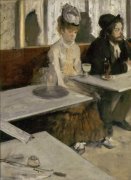
Degas painting Cafe
At the end of the 19th century, city cafes were very familiar to artists and even became the subject of their work. Degas painted Cafe from a different angle.
2014-05-14 Coffee culture paintings cafes coffee beans
Indian Coffee Manor grows Kahayang Gan Manor
The coffee in India is mainly Arabica coffee, while Robbist coffee was introduced at the end of the 19th century and accounted for a certain proportion. Indian Grade A coffee beans are baptized by the monsoon and are rich, smooth and delicious, but have a peculiar spicy taste. A coffee connoisseur once commented that grade A coffee has a taste similar to that of Indonesian aged beans, which may have something to do with their handling.
2016-06-14 India coffee manor planting Kaha Yanggan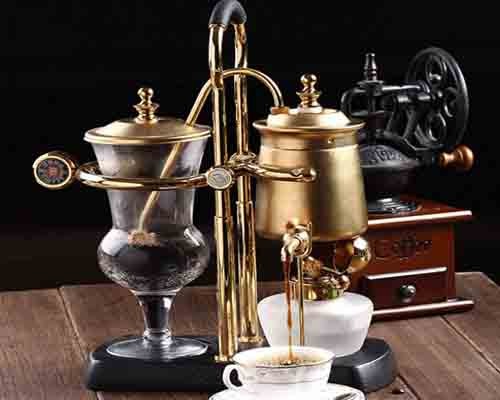
Get to know the Belgian pot-let you understand the world of coffee
Abstract: Belgian Royal Coffee Pot, also known as "balanced plug Pot" (Balancing Syphon). The inventor is James Napier, an English shipbuilder. The Belgian kettle is exquisite and gorgeous, so it becomes a high-end handicraft, and its working principle is strange. Belgian Royal Coffee Pot, also known as Viennese Royal Coffee Pot or balanced plug Pot (Balancing Siphon), 19
2015-11-17 Understand Belgium let you read coffee world abstract royal
General knowledge of Fine Coffee Culture on Coffee Culture in Hungary
Hungary is not only a unique hot spring kingdom, but also a veritable coffee empire. Budapest was known as the city of 500 cafes at the end of the 19th century. Cafes are the gathering place of Hungarian literati. Many writers go to fixed cafes and sit in fixed seats every day, and many of their works are done in cafes. Most of the addresses on these writers' business cards
2015-02-11 Boutique coffee culture common sense in detail Hungary not only is a day.
Why do coffee beans have to be matched? what will be the flavor of the coffee beans?
Baking is also related to the birthplace of Espresso. Espresso is a coffee extraction method that originated in Italy. At the end of the 19th century and the beginning of the 20th century, when Espresso extraction was born, Italy was not a rich country in Europe. Due to its own economic strength, the popular coffee in Italy was not of high quality, and most of them drank inferior robusta coffee.
2016-06-20 Coffee beans why proceed mix come out flavor how
Robots run cafes. Do you want to experience it?
The man-machine war of the century ended not long ago, when Google AlphaGo swept South Korean go master Lee se-dol at 4:1, once again refreshing the world's understanding of artificial intelligence. Now, Shanghai has set off the tide of the times again, and the army of robots has reached the center of the world. Hongqiao new nuclear Vanke Hongqiao Cloud, their goal is to detonate China's cloud future! Enjoy the future Vanke led the creation of the first robot cafe in Shanghai
2016-08-26 Robots operators cafes you want experience century man-machine war not long ago
Introduction to the characteristics of Tanzania Kilimanjaro Coffee Flavor and Taste Manor
Tanzania is one of the birthplaces of ancient humans. BC had trade with Arabia, Persia, India and other places. In the 7th and 8th century, Arabs and Persians immigrated in large numbers. The Arabs established the Islamic kingdom at the end of the 10th century, and the Persians established the Zanzibar empire on the eastern coast of the mainland. [3] in 1886 Tanganyika inland was placed under the German sphere of influence, 19
2016-08-25 Fragrance complement each other Tanzania Kili Mazar Luo coffee coffee flavor mouth
Guatemala boutique coffee beans
The extra-hard coffee beans here are full-grained, delicious and balanced, and the coffee made with them is pure and rich. Guatemala coffee once enjoyed a reputation as the best quality coffee in the world, but its quality also declined for a time. What is gratifying, however, is that its reputation is gradually being restored. In 1750, Father Jesuit introduced coffee trees to Guatemala, at the end of the 19th century.
2016-06-15 Guatemala boutique coffee beans coffee America here very hard particles
What are the seven coffee producing areas in Guatemala? what is the flavor of fine Guatemalan coffee?
Coffee was really introduced into Guatemala in 1750 by Father Jesuit, where the coffee industry was developed by German colonists at the end of the 19th century. Today, most of the coffee industry's production takes place in the south of the country. There are seven main coffee producing areas in Guatemala: Antigua, Coban, Atitlan and Huehuete.
2016-05-08 Guatemala 7 coffee producing areas respectively what is it boutique flavor
Coffee, Indonesia, Dutch Promote Coffee
In the process of popularizing coffee to the whole world, the Dutch have spared no effort! Since the end of the sixteenth century, when Venetian merchants resold coffee all over Europe, the Dutch, unwilling to be reduced to second-hand dealers, have deliberately tried to grow their own coffee. Nicholas of Amsterdam in 1696. Nicolaas Witson was the first to suggest to his superiors that coffee should be grown
2015-06-12 coffee indonesia dutch promotion hero worldwide in process
Introduction to the Flavor and Taste of Coffee in Xidamo Shachiso area of Ethiopia
Ethiopia is rectangular, with a ratio of length to width of 3:2. From top to bottom, it is composed of green, yellow and red parallel equal horizontal rectangles, with the national emblem in the middle of the flag. Since the end of the 19th century, Ethiopia began to use the green, yellow and red cross-striped national flag. In modern history, Ethiopia is the first African country to join the forest of free nations. [8] to this century
2016-09-24 Ethiopia Dharma Shaquiso producing areas Coffee Flavor Taste characteristics Fine products
The origin of the name of coffee roasting mode
At present, the naming method mainly comes from two sources: one is the general preference of national drinkers' baking mode: Ruyi baking, French baking and so on. One is the naming rules developed by coffee professionals in the United States from the end of the 19th century to the beginning of the 20th century.
2014-08-15 Coffee knowledge coffee roasting the origin of the name of roasting mode
Puerto Rican Coffee Flavor description characteristics of Grinding degree introduction to the taste of varieties in producing areas
Puerto Rico's new farm coffee is a mild, supple and well-balanced island bean with a charming single malt flavor, extremely sweet when sipped in a cup, and medium-roasted creamy and greasy texture that is often suitable for Puerto Rico island beans. Product description: the whole history of Caribbean coffee has a lot to do with Spanish reclamation, which was in the 18th century.
2016-10-11 Puerto Rico Coffee Flavor description Grinding characteristics Variety producing area taste medium
China's first coffee testing key laboratory starts construction of China Coffee Network yellow caturra
According to the Yunnan Pu'er entry-exit Inspection and Quarantine Bureau, the construction of the national key laboratory for coffee testing began in Pu'er City, marking the birth of China's only national professional laboratory for coffee products in Yunnan Province. Coffee cultivation in Pu'er City began at the end of the 19th century and began to develop in industrialization in 1988. in 2015, the planting area of coffee in the city was 757000 mu, put into production of 402300 mu, and the output was 3.99%.
2016-04-19 China the first coffee testing key laboratory construction yello
A brief introduction to the introduction to Coffee roasting, the complete Book of Coffee self-baking
When the author published the first edition of this book in 1996, roasting coffee beans at home was something that only tireless coffee addicts would do. At that time, roasting coffee beans was a very difficult thing to master, and roasters had to work hard to find a way to roast coffee beans to a moderate brown. Today, individuals still roast coffee beans at home.
2015-01-27 Coffee roasting getting started books coffee self-baking book introduction author 199
The flavor of Guatemalan boutique coffee
The extra-hard coffee beans here are full-grained, delicious and balanced, and the coffee made with them is pure and rich. Guatemala coffee once enjoyed a reputation as the best quality coffee in the world, but its quality also declined for a time. What is gratifying, however, is that its reputation is gradually being restored. In 1750, Father Jesuit introduced coffee trees to Guatemala, at the end of the 19th century.
2016-05-20 Guatemala boutique coffee flavor here extra hard coffee beans granules full